Empowering coastal communities to measure climate vulnerability and build lasting resilience
Climate Change Vulnerability Assessments (CCVAs) systematically measure how at-risk coastal communities are to climate change. By analyzing environmental and social factors, CCVAs provide a comprehensive picture of vulnerability and adaptive capacity.
Six Key Components
Exposure – Climate hazards like sea level rise, ocean warming, and extreme weather
Ecological Sensitivity – Marine ecosystem vulnerability including coral health and fish populations
Social Sensitivity – Community dependence on fisheries for income and food security
Ecological Adaptive Capacity – Ecosystem resilience through biodiversity and protected areas
Social Adaptive Capacity – Community resources like livelihood diversity and infrastructure
Responsive Governance – Local decision-making capacity and disaster preparedness
CCVAs transform complex climate risks into actionable scores that guide interventions and track progress.
Why It Matters
Coastal fishing communities face rising seas, warming oceans, coral bleaching, and severe storms. Without systematic data, they struggle to prioritize actions, secure funding, track progress, and learn from peers.
CCVAs provide the evidence base for strategic adaptation, answering:
- Where are we most vulnerable?
- What interventions will have the greatest impact?
- Are our efforts working?
- Which communities can we learn from?
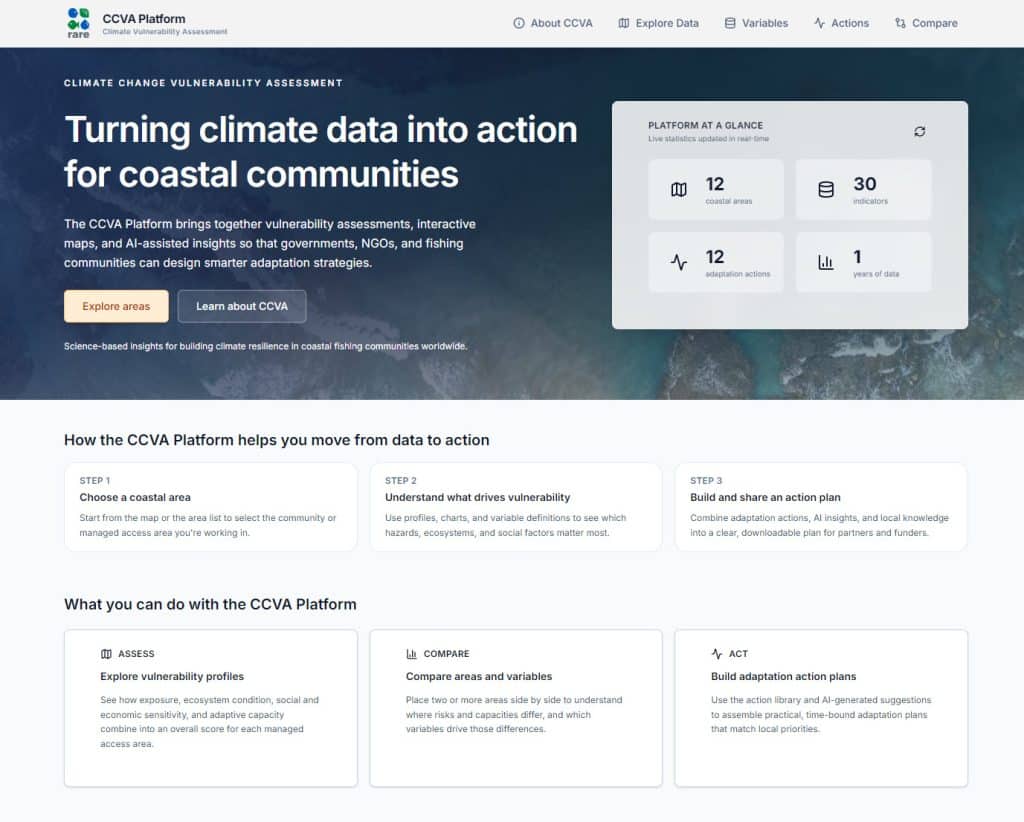
Platform Features
Interactive Global Map
Explore assessed communities worldwide with filters for region, vulnerability scores, and assessment dates.
Rich Visualizations
Component scores, trend analysis, variable heatmaps, and side-by-side community comparisons.
AI-Powered Insights
Tailored recommendations identifying key vulnerabilities, prioritized actions, and similar communities for peer learning.
Resource Library
CCVA methodology, variable definitions, evidence-based actions, and real-world case studies.
Export & Share
Download visualizations, raw data, and reports for funding proposals and planning documents.
Who Uses CCVA?
Conservation Practitioners – Design targeted interventions and monitor effectiveness
Community Leaders – Understand risks and advocate for resources
Government Officials – Identify priorities for adaptation funding
Researchers – Access standardized vulnerability data
Funders – Make evidence-based investment decisions
Get Started
Quick Links:
Learn About CCVA | Explore Data | Browse Actions